
SADC
- Details
- Written by: admin
- Category: SADC
- Hits: 98
A dry 2026/27 summer could turn a climate shock into a regional test of food trade, electricity security and government finances. Why did a region that could see the drought coming wait until it became a crisis?
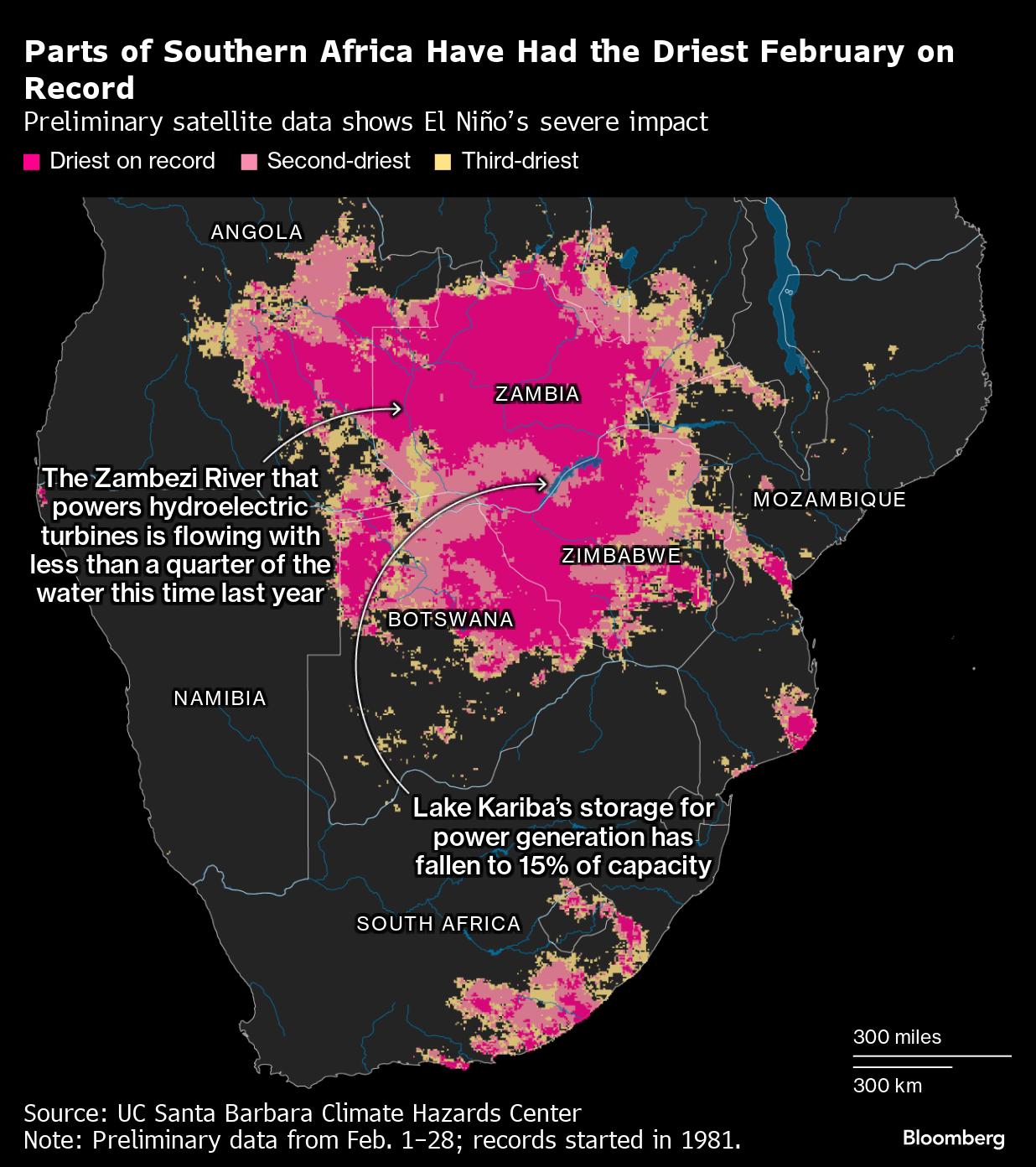
Southern Africa is heading towards a potentially difficult summer. But the real danger from the developing El Niño is bigger than failed crops. If the 2026/27 rainy season turns out as dry and hot as regional forecasts suggest, the shock could move rapidly through food prices, electricity systems, government budgets, foreign-exchange reserves and cross-border trade. That makes the coming summer not simply a weather story, but an economic and political test for SADC.
Large parts of Angola, Namibia, Botswana, southern Zambia, Zimbabwe, Mozambique, South Africa, Eswatini and Lesotho face increased chances of below-normal rainfall, while temperatures are expected to run unusually high across much of the region. The north and north-east could tell a different story, with parts of Tanzania, the Democratic Republic of Congo, northern Zambia and northern Malawi potentially receiving better rainfall. That unevenness is important. Southern Africa may simultaneously confront drought, local flooding and damaging heat.
For governments, however, the political-economic danger lies in the concentration of dry conditions across some of the region's major agricultural, livestock, hydropower and industrial economies.
A drought that could travel across borders
SADC has seen this sequence before. Rain fails in one country. Grain production falls. Imports rise. Governments seek more dollars to pay for food. Neighbouring states begin protecting their own supplies. Maize prices climb. Livestock farmers compete for feed. Hydropower production weakens. Electricity shortages hit industry. What begins as a rainfall deficit becomes a regional economic shock.
The 2023/24 drought was a reminder of how interconnected those risks have become. Zambia, Zimbabwe and Malawi declared drought disasters, while food insecurity spread across the wider region. Another major El Niño so soon afterwards would hit households and governments that have had limited time to rebuild buffers. The central question is therefore no longer merely how much rain will fall? It is whether SADC can stop a climate shock in one country from becoming a food, energy and inflation shock in several others.
South Africa becomes even more important
South Africa enters the season with one major advantage: a relatively healthy grain position following stronger agricultural production. That gives the region an important cushion. But it also highlights Southern Africa's dependence on one country as a food-security backstop. When harvests fail elsewhere, South African maize often moves north into Botswana, Namibia, Zimbabwe, Mozambique, Eswatini and Lesotho. A substantial South African crop failure would therefore have consequences far beyond its borders. The risk is not that South Africa suddenly runs out of food. The more immediate danger is that exportable surpluses shrink at exactly the moment neighbouring countries need more imports.
Prices would respond first. That could become particularly uncomfortable for countries with weak currencies or limited foreign-exchange reserves. Imported maize may still be physically available, but considerably more expensive in local currency. For SADC, South Africa's summer grain belt has effectively become a piece of regional strategic infrastructure.
Zambia and Zimbabwe: when rainfall becomes electricity
Nowhere is the relationship between weather and the wider economy clearer than Zambia and Zimbabwe. Both depend heavily on the Zambezi River system and Lake Kariba for electricity. The lake enters the coming season in a considerably stronger position than during the depths of the recent drought. But another weak rainfall year would again raise questions about future inflows and hydropower generation.
That matters enormously for Zambia. Copper mining is electricity intensive and central to the country's exports, government revenue and foreign-exchange earnings. Severe load-shedding therefore does more than inconvenience households: it can weaken the productive engine of the economy.
Zimbabwe faces similar pressures as electricity shortages constrain manufacturing, mining, agriculture and businesses already operating in a difficult economic environment.
The transmission chain is brutally simple: less rain → weaker river flows → lower hydropower output → more load-shedding → higher production costs → slower economic growth. For Zambia and Zimbabwe, El Niño can therefore simultaneously attack food production and electricity supply. That is why drought resilience and energy diversification are increasingly the same policy discussion.
Zimbabwe faces another agricultural gamble
Zimbabwe is particularly vulnerable to the timing of rainfall. Much of its staple agriculture remains rain-fed. Even where seasonal rainfall totals eventually appear respectable, prolonged dry periods during December or January can severely damage maize during critical stages of development. This is one reason climate scientists increasingly warn against judging agricultural risk purely from total seasonal rainfall. A crop does not consume rainfall statistics. It needs moisture at particular stages of growth. A three-week dry spell accompanied by extreme heat can therefore be more damaging than a modest reduction in total seasonal rainfall.
For Zimbabwe, the political implications are substantial. Another weak maize harvest could force greater food imports, increase pressure on household incomes and revive questions about government support for vulnerable communities. The country is encouraging drought-tolerant seed, conservation agriculture, water harvesting and irrigation, while increasingly promoting the productive use of dams for agriculture, fisheries and local economic activity. The challenge is implementation at sufficient scale.
Botswana and Namibia: cattle, water and rural wealth
In Botswana and Namibia, the threat is not only maize. Livestock is central to rural livelihoods and, in many communities, functions as stored household wealth. Drought destroys that wealth gradually. Pasture deteriorates. Water points come under pressure. Farmers buy additional feed. Animals lose condition. Eventually herds have to be sold into weak markets — often when many other farmers are trying to sell simultaneously. By the time drought relief arrives, households may already have lost assets built up over many years.
High temperatures worsen the problem because they increase evaporation from dams, soils and grazing land. This is why a slightly below-average rainfall season combined with exceptional heat can sometimes be more damaging than rainfall figures suggest. For Namibia and Botswana, water security, livestock management and drought policy are inseparable.
Mozambique and Malawi could face two emergencies at once
The regional picture becomes more complicated further east. Parts of Malawi and Mozambique could face substantial rainfall deficits, while northern areas may experience considerably wetter conditions. Mozambique could therefore find itself preparing for drought in central and southern districts while remaining alert to flooding and tropical systems further north. That places pressure on already stretched disaster-management budgets. It also illustrates an increasingly important reality: governments can no longer prepare for one national climate emergency. They may have to finance drought relief, flood response and agricultural support simultaneously.
The next shock could be food inflation
The most politically sensitive consequence may eventually appear not in fields or dams but in supermarkets. If harvests decline across several countries at once, maize and other food prices can rise rapidly. Governments then confront difficult choices. Should they subsidise food? Release strategic grain reserves? Cut import duties? Restrict exports? Provide drought relief? Increase social transfers? Or allow prices to rise and protect public finances?
Each response has regional consequences. An export restriction that protects consumers in one SADC country can make food more expensive in another. That is why the coming El Niño could test whether SADC acts as an economic community or simply as a collection of national markets when shortages emerge.
The temptation to close borders
Food shortages frequently produce political pressure for governments to "secure domestic supply". Export restrictions can be popular politically because they appear to keep food at home. But if several countries adopt them at once, the regional market begins to fragment. Import-dependent states are then forced to source grain further afield, increasing shipping costs, foreign-exchange requirements and delivery times. The better regional response would be early coordination: countries identifying likely deficits, expected surpluses, grain stocks, import requirements and transport bottlenecks before the shortage peaks. SADC already possesses regional structures for climate monitoring, food-security assessment and disaster coordination. The question is whether those systems can influence economic decisions early enough.
Drought can become a fiscal crisis
El Niño also arrives at an uncomfortable time for governments already facing pressure to fund infrastructure, health, education and social programmes. Drought adds another bill. Governments may have to finance food imports, agricultural inputs, livestock support, emergency water provision and social protection simultaneously.
Where hydropower fails, electricity imports or emergency generation add further costs. Economic growth can weaken at the same time. That means tax revenue may decline precisely when expenditure requirements are increasing. For highly indebted governments, a climate event can therefore become a fiscal event. And where currencies are already under pressure, greater food and energy imports can reinforce inflation.
Scientists say the rainfall total does not tell the whole story
Climate researchers offer an important qualification: El Niño increases drought risk, but it does not guarantee drought everywhere. Southern African rainfall is influenced by several interacting climate systems, including conditions in the Pacific and Indian oceans as well as regional atmospheric circulation. Very strong El Niño events have produced surprisingly different rainfall outcomes in the past. That uncertainty does not mean governments should ignore the forecast. It means they should use it intelligently.
Scientists increasingly argue for combining seasonal forecasts with shorter-range weather information, soil-moisture monitoring, vegetation conditions, dam levels and the actual onset and distribution of rainfall. The practical question for a farmer is not whether a meteorological agency predicts "70% probability of below-normal rainfall". It is whether to plant now, plant less, switch crop varieties, conserve seed or wait for the next rainfall window.
The academic sound bites
"El Niño is a risk multiplier, not a drought guarantee."
It shifts the odds. It does not dictate exactly what will happen in every district.
"For agriculture, the dry spell can matter more than the seasonal rainfall total."
Timing matters. Rain arriving after a crop has already passed a critical growth stage cannot reverse the damage.
"A regional climate outlook should trigger decisions, not simply discussion."
The economic value of forecasting lies in changing behaviour before losses occur.
And perhaps the most important:
"Early warning without early action is simply an earlier description of the disaster."
The solutions are known
Southern Africa is not short of proposed solutions. The most immediate is anticipatory action — releasing support before harvests fail rather than after households have exhausted their food and livestock. Farmers can be given drought-tolerant and early-maturing seed before planting. Livestock farmers can receive feed support before animals lose condition. Governments can pre-position grain and identify import requirements before prices spike. Water authorities can intensify conservation before reservoirs reach emergency levels.
Another priority is irrigation. Southern Africa cannot continue treating large-scale dependence on rain-fed agriculture as an unavoidable fact of geography. Small dams, groundwater, solar-powered irrigation, water harvesting and more efficient irrigation systems could dramatically reduce the vulnerability of rural economies.
Energy diversification is equally important. Solar, wind, battery storage and stronger regional electricity trading can reduce the economic damage caused when drought simultaneously hits hydropower systems. Crop insurance and disaster-risk financing can also transfer part of the cost away from households and state budgets.
But none of these measures works particularly well when introduced after the drought has already arrived.
This is ultimately a SADC test
The coming El Niño will test more than agricultural preparedness. It will test whether Southern Africa has learned to treat climate risk as a regional economic-security issue. Food, electricity, water and trade cross borders. So do the consequences when any of them fail.
South Africa's maize reserves matter to Lesotho and Zimbabwe. Kariba's water matters to Zambia and Zimbabwe. Mozambique's transport corridors matter to landlocked neighbours. Regional power markets matter when hydropower falters. That interdependence is precisely why a severe drought should not be managed solely through national emergency declarations after the event.
SADC has received the warning before the first major planting rains. The political question is what governments do with it. Because if the rains disappoint, leaders will eventually face a much harder question: Why did a region that could see the drought coming wait until it became a crisis?
- Details
- Written by: admin
- Category: SADC
- Hits: 78
Zambia’s election result has been declared, but questions about counting, court access and accountability remain. SADC’s credibility will depend on how openly those questions are answered.
The result and the dispute
Zambians voted on 13 August 2026. The Electoral Commission of Zambia declared President Hakainde Hichilema the winner on 18 August, with approximately 60% of the vote against opposition challenger Brian Mundubile’s approximately 38%, according to AP’s report of the official result. Hichilema was inaugurated for a second term on 1 September.
The dispute concerns the process as well as the outcome. On 14 August, counting was temporarily suspended. The commission cited attacks on electoral officials and stolen ballot papers; counting subsequently resumed. Mundubile raised concerns about possible interference. The interruption alone does not prove manipulation. AP reported the interruption and competing explanations.
Political arrests added to the tension. AP reported on 27 August that police detained Mundubile over alleged treason. Earlier, authorities alleged that weapons and plans for an armed insurrection justified arrests of opposition figures; Mundubile denied those allegations. The UN human rights chief expressed concern. An allegation is not a conviction. The public interest is in evidence, due process and scrutiny of how state power is exercised.
What SADC observers found
The SEOM Preliminary Statement, issued on 15 August 2026 by Head of Mission Hon. Samuel B. Tembenu, is the official interim assessment—not a final verdict on the declared result.
Observers visited 277 of 13,529 polling stations and found calm conditions at 275. SEOM praised preparations and transparent handling of electoral materials. However, it identified gaps in party-finance legislation and ballot secrecy, and recorded concerns about media freedom. It distinguished direct observations from allegations it could not verify, including misuse of public resources.
Crucially, SEOM said it could not observe counting and collation during the suspension. It reserved further assessment of results management for its final report, promised within 30 days. Its recommendations included stronger ballot reconciliation and ending practices that could link ballots to identifiable voters.
These findings justify specific questions about safeguards and accountability. They do not establish that the declared winner lost. Equally, calm voting at observed stations cannot resolve what happened beyond the mission’s observation.
Court access needs a precise explanation
Reporting on a 25 August judiciary statement said the Chief Justice acknowledged receiving election-challenge documents at his private email address and referred them to the Constitutional Court to determine their legal effect. The report also described court-premises closures around the petition deadline.
Receiving an email and accepting a properly filed petition are not the same legal event.
Nor does the absence of a registered petition, by itself, resolve whether people had a practical opportunity to lodge one. A credible explanation should identify which filing channels remained available, what instructions litigants received and what the court decided about the documents. Those questions require records and rulings, not inference about motives.
What Malawi and Mozambique show
Malawi demonstrates the value of an effective remedy. Its courts annulled the 2019 presidential election, and the Supreme Court of Appeal upheld that decision. Lazarus Chakwera won the fresh vote in June 2020, as documented in the US State Department’s country report. The lesson is not that Zambia requires the same outcome. It is that evidence must have a credible route into an independent process.
Mozambique illustrates why observation cannot end with voting. Disputes following its 2024 election were accompanied by serious unrest. In November, SADC leaders addressed the post-election political and security situation and committed to engagement through the regional security organ. The relevant warning is about timing: confidence-building is harder once confrontation has deepened.
For Zambia, both examples point to the same priority: give electoral complaints a credible institutional response before mistrust hardens.
Three actions that would strengthen confidence
- Make the result traceable. The ECZ should provide accessible polling-station and constituency figures, explain corrections and document the counting interruption. SADC’s mission should assess whether the published record allows independent reconciliation with national totals. Any gaps should be identified and explained.
- Explain the legal pathway. Zambia’s judiciary should clarify filing arrangements, the status of attempted petitions and any relevant rulings. Police and prosecutors should make their allegations and procedural steps clear through lawful processes. Defendants must be able to contest the evidence; political disagreement cannot establish criminal guilt.
- Show the follow-through. SADC’s Organ on Politics, Defence and Security Cooperation should seek responses to observer recommendations and communicate the next steps. SADC can press for accountability and facilitate dialogue; decisions on Zambia’s legal disputes belong to its competent courts.
Credibility is earned after the declaration
The strongest regional response would neither endorse every opposition allegation nor treat the announced margin as an answer to every concern. It would distinguish proven events, contested claims and unanswered questions, then identify who must respond.
The ECZ should make the count independently traceable. The judiciary should explain how election challenges could be filed and what became of those submitted. SADC should publish its full findings and a clear programme of follow-up. Citizens deserve answers they can check, not another round of assurances.
- Details
- Written by: News Correspondent
- Category: SADC
- Hits: 37
The warning is clear: Zimbabwe is heading into a season in which below-normal rainfall and above-normal temperatures are more likely. The real question is whether that warning reaches farmers early enough to change what happens in their fields.
Read more: El Niño Is Back. Zimbabwe’s Farmers Need More Than a Forecast.