
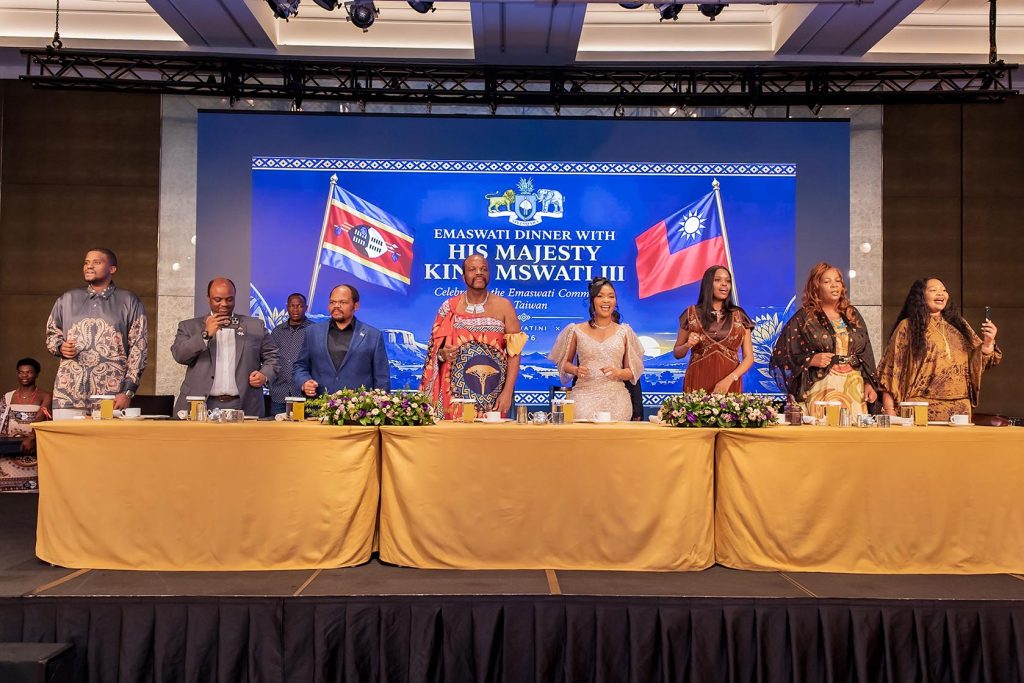
 TAIPEI - After pledging to strengthen his country's "enduring friendship" with Taiwan and attending Taiwan's 115th National Day Celebrations, King Mswati went on to meet Emaswatini that are based in Taiwan.
 Eswatini
- Details
- Written by: Gcina Shandu
- Category: Eswatini
- Hits: 28
TAIPEI - After pledging to strengthen his country's "enduring friendship" with Taiwan and attending Taiwan's 115th National Day Celebrations, King Mswati went on to meet Emaswatini that are based in Taiwan. In his remarks the King said Eswatini had already begun implementing the oil reserve project but now needed a bigger buffer to protect the economy from fuel shortages and international market shocks.His Majesty said the Strategic Oil Reserve is designed to cushion the country against fuel shortages, external supply shocks and volatility in international petroleum markets.
The current project is expected to provide storage equivalent to about 60 days of national fuel supply, but the King said prevailing global conditions had made it necessary to increase that buffer to 90 days.
“We have already had projects that have begun, like the Strategic Oil Reserve, currently 60 days, and we want to increase it to 90 days storage,” His Majesty told the gathering. He said Taiwan had shown support for Eswatini’s position, particularly given the global situation and the disturbances affecting fuel supply chains. The Phuzumoya Strategic Oil Reserve is one of the country’s most significant energy security investments. The project is valued at about E5.2 billion, with the facility designed to store around 80 million litres of fuel and provide the country with a strategic stockpile for emergencies.
The reserve is being developed with support from Taiwan and is expected to strengthen resilience against fuel shortages, price shocks and disruptions caused by conflict, refinery breakdowns or transport bottlenecks. His Majesty said the importance of the reserve should be understood in practical economic terms.
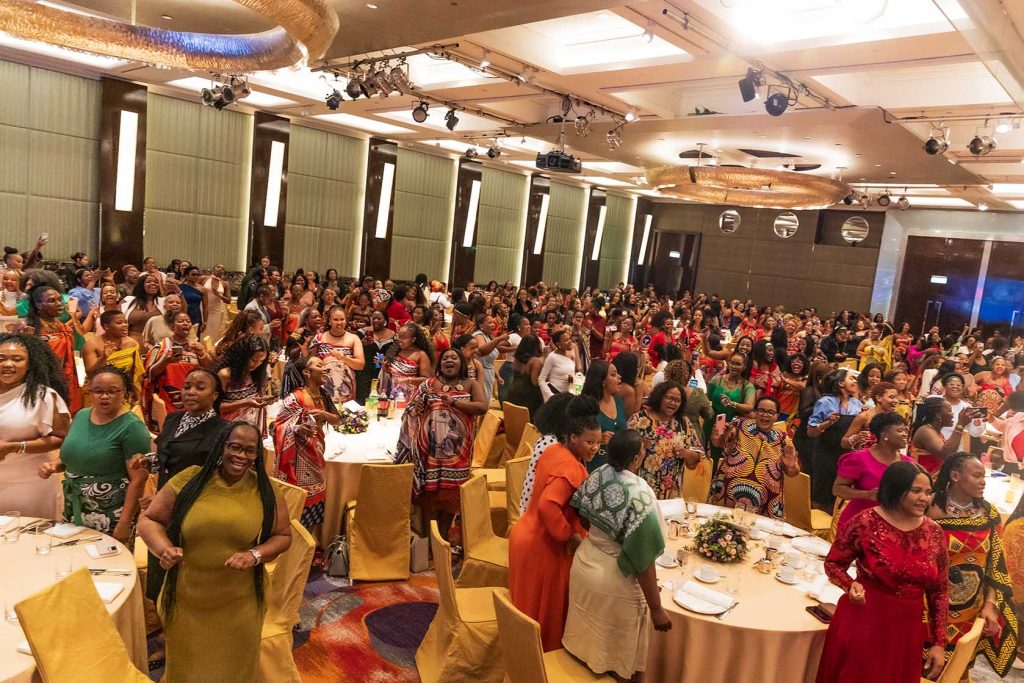
“It will require many skilled emaSwati to oversee such projects,” he said, adding that students and professionals abroad had a duty to acquire knowledge that could be used to transform the kingdom. He said the country was looking for expertise that would help make strategic projects work efficiently and profitably.
His Majesty further observed that projects in the petroleum sector were sensitive and capital intensive, with large cash outflows and high expectations for proper returns. He said countries and partners approached for support or investment would need confidence that such projects were professionally managed and commercially sound. The King placed the discussion within a broader African development context, saying the continent had resolved under Agenda 2063 to move away from failure and build credible systems that deliver results.
He urged emaSwati in Taiwan to see themselves as part of that transformation, not only as students or workers abroad, but as future contributors to national and continental progress.
His Majesty said his visit included successful bilateral engagements with Taiwanese leaders and businesses, with discussions covering scholarships, industrial development, energy, employment opportunities and investment.
He said Taiwan’s development journey offered lessons for Eswatini, particularly in how a country with limited natural resources could use human capital, discipline and innovation to become globally competitive.
- Details
- Written by: Gcina Shandu
- Category: Eswatini
- Hits: 138
Explosives in Peak Timbers. A river clouded by mining. Allegations of mercury, cross-border networks and official complicity. Eswatini’s illegal-mining crisis is no longer a story about people digging abandoned shafts. It is a test of whether the state can protect public water, control explosives and dismantle the business financing the pits.


By News Correspondent
MBABANE — The warning arrived from Peak Timbers forest: four SuperPower emulsion cartridges, a commercial detonator and detonating cord found in a shack during a police patrol on September 4. Preliminary investigations linked the cache to illegal mining in northern Hhohho.
Then came the water alarm. The Phophonyane River, serving Pigg’s Peak and surrounding communities, is reportedly being affected by mining. The Eswatini Environment Authority says an inspection found deteriorating water quality and high turbidity. Local reports allege that miners are using mercury to process gold and washing equipment in or near the river.
Turbidity does not prove mercury contamination. No public laboratory results have established the mercury concentration. That is precisely why authorities must test the river, publish the results and keep testing. Communities should not have to guess whether their water is safe.
The crisis is moving up the chain
Mercury has reportedly been entering an illicit supply market linked to gold mining. The metal binds to gold, but it also threatens soil, water and the food chain. The World Health Organization warns that artisanal gold mining is a major source of mercury pollution, with serious risks to the nervous system, kidneys, children and unborn babies. Eswatini has been party to the Minamata Convention since 2016.
Explosives raise the stakes again. Fire can fracture rock; commercial explosives can open a shaft quickly and kill people nearby. Every cartridge and detonator should be traced through manufacture, importation, purchase and distribution. Who bought them? Who transported them? Who paid?
In June, two Botswana nationals were arrested in Mbabane and charged with allegedly possessing explosive-related material without authorisation. Prosecutors said police were investigating robberies in northern Hhohho in which explosives were allegedly used. There is no established evidence connecting that case to Peak Timbers. The repeated appearances of explosive material still demand an intelligence-led supply-chain investigation.
From desperate digging to organised business
Police operations around the old Pigg’s Peak mine seized equipment and mineral-bearing soil, including about 130 bags recovered near Phophonyane in March. Investigations have described organised access to shafts, specialist equipment and links involving people from several Southern African countries.
That does not make every foreign national a criminal, or every informal miner part of a syndicate. But recruiters, financiers, mercury suppliers, transporters, cross-border buyers, armed protection and explosives describe a supply chain. Arresting miners at the bottom of it will not stop the money at the top.
Raids have displaced activity from one site to another. They have not removed the profit. The state needs coordinated policing, customs intelligence, financial investigations and secure abandoned mines. It also needs a lawful livelihood policy for people driven into dangerous work by unemployment.
Security and corruption questions
Illegal mining now touches water security, border control, tax loss and public safety. Reports of firearms, cross-border movement and an illegal mercury trade show why the issue belongs on the national-security agenda. A smaller country can contain a network early, but only if agencies share intelligence before it becomes entrenched.
Police Commissioner Vusi Manoma Masango has acknowledged allegations that officers may benefit from illegal mining and promised action where evidence exists. An allegation is not proof. It does, however, justify an independent investigation that follows money, licences, explosives and mineral buyers as closely as it follows miners.
What must happen now
- Independently test Phophonyane and publish mercury and heavy-metal results.
- Map mining sites against drinking-water sources and secure abandoned workings.
- Trace every recovered explosive and investigate financiers, suppliers and buyers.
Water changes everything


Governments can recover minerals and seal shafts. They cannot easily reverse contamination once it reaches a community water source. Phophonyane should be the turning point: publish a baseline, repeat the tests and tell residents what the results mean.
This is no longer a hole-in-the-ground problem
Explosives, mercury, mobile crews, foreign-linked suspects, seized mineral soil and allegations of corruption are connected by one question: who is making money, and who is paying the environmental and public-health bill?
Eswatini still has time to act. But the answer cannot be another raid that sends miners to the next forest. It must be a coordinated effort to test the water, secure the explosives, follow the money and dismantle the business behind the digging.
- Details
- Written by: Gcina Shandu
- Category: Eswatini
- Hits: 85
MBABANE — Explosives hidden in a forest shack. Four women recovered from a shallow grave near a church. Two children allegedly killed by their father. A young mother hacked to death after reported threats. A teenage girl allegedly raped and suffocated. Illegal guns and ammunition continuing to surface in police operations.
Over the past few months, Eswatini has been confronted by a succession of disturbing violent incidents. They are not one criminal conspiracy. The cases involve different suspects, locations and circumstances, and there is no evidence that they are directly connected. But together they raise a wider national question: is Eswatini confronting a deeper public-safety problem involving gender-based violence, vulnerable children, illegal firearms, explosives and weaknesses in early intervention?
The latest warning came from the forests around Pigg's Peak.
Explosives hidden at Peak Timbers
On September 4, 2026, police officers conducting routine patrols at D2 Peak Timbers forest discovered explosives concealed in a bag inside a shack. According to the Eswatini Observer of September 8, the cache contained four SuperPower emulsion cartridges, one commercial detonator and detonating cords of different lengths. Chief Police Information and Communications Officer Senior Superintendent Phindile Zwane confirmed the discovery and said Pigg's Peak police had opened an investigation. Preliminary investigations were examining a possible connection to illegal mining in northern Hhohho.
That possible connection remains under investigation. There is no publicly available evidence establishing that the explosives were intended for terrorism, an attack on a particular target or any other specific violent act. But their presence in an unauthorised location raises another question: where did they come from?
The Peak Timbers discovery was not an isolated explosives case.
Other explosives cases preceded Peak Timbers
On June 23, police arrested two Botswana nationals in Mbabane following an intelligence-driven operation. When the men appeared in court, they were charged with unlawful possession of explosive materials and immigration offences. The Times of Eswatini reported on June 26 that investigators were examining possible links between the suspects and heist-related activity in northern Hhohho. Police allegedly recovered two non-electric explosive detonators from them. The allegations remain before the criminal justice system.
The Eswatini Observer also reported that in April 2026, a South African national was arrested near Mpuluzi after police allegedly found a blasting cartridge, capped fuse and detonating cord in his possession without a permit. He reportedly told investigators that he was involved in illegal mining in South Africa. There is no evidence establishing that the April, June and September cases are connected.
Nevertheless, three explosives-related incidents within several months legitimately raise questions about how controlled explosive materials are moving into unauthorised hands. Are they being stolen? Smuggled across borders? Diverted from legitimate mining or industrial operations? Or supplied through organised criminal networks?
Those are questions only a wider investigation into the source and movement of the explosives can answer.
Four women recovered near a church
The explosives cases emerged during the same period in which Eswatini was struggling to comprehend another deeply disturbing case.
In July 2026, police investigations at Mfabantfu led to the recovery of the bodies of four women from a shallow burial site near the Apostolic Faith Church International. The women were identified as Bongiwe Phetsile Mkhonta, Samkelisiwe Shabangu, Noncedo Mohale and Nolwazi Nonhlanhla Langa. Church leader Nkosingiphile Allen Zwane was subsequently charged with four counts of murder and two offences under the Sexual Offences and Domestic Violence Act. The Times of Eswatini, reporting on July 9, said police were continuing to gather evidence in the case.
The charges against Zwane remain allegations unless proven in court, and he is entitled to the presumption of innocence. But the recovery of four women's bodies from the same area created national shock extending far beyond the prosecution itself. Community leaders at Zombodze publicly condemned the alleged acts while urging residents not to victimise the accused man's family and to allow the justice process to run its course, the Times of Eswatini reported on July 8.
The case inevitably raised broader questions about missing women, vulnerability, abuse of trust and how communities respond when people disappear. And it unfolded against already alarming national figures on gender-based violence.
Nearly 2,000 GBV cases in three months
On June 17, National Commissioner of Police Manoma Vusi Masango told a national Gender-Based Violence Indaba that police had recorded 1,994 GBV cases during the first three months of 2026. According to the Eswatini Observer on June 18, 22 people had died in GBV-related incidents over the same period. Masango described gender-based violence as one of the country's most serious challenges.
Those figures change the perspective through which individual killings must be viewed. An isolated murder can be treated as an exceptional crime. Nearly 2,000 reported cases within three months point towards a much wider social and policing challenge.
And some of the incidents reported around the same period demonstrate how domestic conflict can become fatal.
Two children dead at Lomahasha
On June 2, the Times of Eswatini reported that police had opened two murder cases and an inquest after two children, aged eight and 11, were found dead at Matfuntini under Lomahasha. Their father was subsequently found hanging from a tree nearby. Police and relatives said the deaths occurred against a background of a domestic dispute.
Traditional leaders subsequently urged residents facing domestic problems to seek assistance rather than allowing disputes to escalate.
But the story became even more troubling as reports emerged that there may have been earlier concerns about the children's safety. On June 6, the Times of Eswatini reported allegations that relatives had previously been worried about the children amid conflict between their parents. SWAGAA Executive Director Nonhlanhla Dlamini argued that the deaths demonstrated the importance of moving children into places of safety when credible threats are identified. Police were still investigating the circumstances surrounding the earlier warnings.
The case therefore raised a question that extends beyond one family:
When warning signs exist, who is responsible for intervening before children die?
Police? Social welfare? Schools? Traditional authorities? Relatives?
The answer is likely to involve all of them.
A 20-year-old woman killed after alleged threats
Another case occurred at Maphungwane in May. On May 7, the Eswatini Observer reported that 20-year-old Phindile Lenhle Ndlangamandla had been killed at her home, allegedly by the father of her child. According to her family, the relationship had ended months earlier and the man had allegedly threatened her life. Her sister told the newspaper that threats had previously been reported to police, although she said no formal charges had been laid.
Acting Chief Police Information and Communications Officer Inspector Mazwi Ndzimandze confirmed that a 20-year-old woman had been attacked and that the suspected assailant was later found dead at a sports ground. Police treated the incident as a murder-suicide.
The precise history of the reported complaints would need to be established independently.
But the case raises another recurring question in GBV investigations: What should happen when threats move from angry words to credible warnings that somebody may be killed?
Teenager allegedly raped and suffocated
Just days later, another case involving a young victim was reported. On May 9, the Eswatini Observer reported that Big Bend police had arrested a 39-year-old man accused of raping and suffocating a teenage girl. According to the report, the girl was allegedly followed while going to an outside toilet before being sexually assaulted and killed.
Police said investigations were continuing ahead of the suspect's court appearance. The accusation remains subject to the criminal justice process.
Yet when considered alongside the country's GBV statistics, the case reinforces the uncomfortable reality that women and children can face extreme violence in ordinary environments — homes, paths, toilets, churches and neighbourhoods.
Illegal guns add another dimension
The circulation of illegal weapons creates a further layer of concern. On September 3, National Commissioner Masango disclosed that police had seized 58 illegal firearms and 509 rounds of live ammunition between October 1, 2025 and August 31, 2026.
During the same period, 87 people were arrested and charged with unlawful possession of firearms — 65 emaSwati and 22 foreign nationals.
The figures were released as police marked the African Union Firearm Surrender Amnesty Month. Masango expressed concern that illegal firearms continued to circulate despite the annual opportunity for people to surrender them without prosecution.
The significance lies not only in the weapons police recovered. It lies in the weapons that reached communities in the first place. The same question now applies to the explosives at Peak Timbers.
Not one conspiracy, but several warning signs
There is no evidence establishing that the Peak Timbers explosives, alleged church killings, domestic murders, sexual violence, illegal firearms and illegal mining form part of one coordinated criminal phenomenon. But they expose different vulnerabilities within the same society.
One concerns violence against women.
Another concerns the protection of children.
A third involves illegal firearms and explosives.
A fourth involves cross-border and organised criminal activity.
And another concerns whether institutions respond effectively when warning signs appear before tragedy occurs.
These are fundamentally questions about prevention. When somebody repeatedly threatens to kill a former partner, what happens next?When relatives fear that children may be unsafe, who assesses that danger? When a woman disappears, how quickly does the missing-person investigation escalate? When police recover illegal detonators, do investigations end with the person carrying them — or trace where they were obtained? When commercial explosives disappear from legitimate supply chains, who accounts for them?
And when the same categories of violence repeatedly produce new victims, at what point does the response move from individual criminal investigations to a coordinated national prevention strategy?
Peak Timbers is about more than one bag
The explosives discovered at Peak Timbers on September 4 may eventually prove to be connected simply to illegal mining. Or the investigation may reveal something more serious. At present, that remains unknown. What is known is that someone apparently obtained controlled explosive material, transported it into the forest and concealed it inside a shack.
Finding the explosives removed an immediate danger. Finding where they came from, who placed them there and why may be considerably more important.
And against a background of murdered women, dead children, reported sexual violence and continuing seizures of illegal weapons, the Peak Timbers discovery becomes part of a much wider public-safety conversation.
Eswatini has experienced enough disturbing cases over the past several months for the country to ask difficult questions about violence, policing and prevention.
The incidents may be unrelated. The warning they collectively carry is not.
- Details
- Written by: Gcina Shandu
- Category: Eswatini
- Hits: 71
MBABANE — A disputed proposal to use E10 million in government subvention funds to buy a farm has become a central issue in a High Court battle over who should investigate the Eswatini Medical Christian University — and whether the investigation itself can command public confidence.

The allegation is contained in a replying affidavit filed by the EMCU Council in proceedings challenging a government-appointed committee established to investigate governance and financial concerns at the university. According to the council, Mbuso Simelane, who has since been appointed to chair the investigative committee, previously headed the EMCU Foundation when the proposed farm transaction arose.
The council alleges that approximately E10 million originating from government subventions to the university was proposed for the acquisition of the property. It further says the transaction was stopped before the money was spent.
While the allegations have not been tested or upheld by the High Court, the case raises a broader question: whether someone previously connected to a disputed financial proposal involving EMCU should later chair an investigation into the institution.
THE CASE AT A GLANCE
E10mGovernment subvention funds alleged to have been proposed for a farm purchase.
High CourtThe inquiry is restrained while its legality and composition are challenged.
Still untestedThe affidavit allegation is not a judicial finding and depends on the documentary record.
The money trail
At the centre of the dispute is not simply the proposed farm purchase, but the source, intended use and governance of the E10 million.
According to the EMCU Council's affidavit, the money in question originated from government subventions to the university and was later proposed for use in acquiring a farm through the EMCU Foundation. The council says the proposal was stopped before any funds were transferred. If correct, that account raises an immediate public-finance question: was money appropriated to support the university being considered for a purpose that fell outside the conditions attached to the government subvention?
The key records would include the government's funding agreements with EMCU, correspondence relating to the proposed farm purchase, council and foundation minutes, any property valuation or offer to purchase, internal approval memoranda, and documents identifying the proposed source of the E10 million.
Those records should establish who initiated the transaction, how the purchase was justified, who would have owned or controlled the property, which governance structures considered the proposal and whether government approval was required before subvention funds could be committed.
The relationship between EMCU and the EMCU Foundation is also critical. If the foundation was established primarily to raise additional resources for the university, the question becomes whether it had any authority to direct or commit money already provided by government to EMCU. It would also be necessary to establish whether university funds and foundation funds were maintained separately and what controls governed transfers or transactions between the two entities.
The council's claim that it stopped the proposed purchase is significant, but it does not end the inquiry. If the E10 million proposal progressed far enough to require council intervention, there should be a record of how it originated, who supported it and what approvals had already been sought or obtained.
That matters because effective financial control is not measured only by whether public money ultimately disappears. It is also measured by whether institutions can detect and stop expenditure that may fall outside approved purposes before funds are committed. Conversely, if the proposed farm purchase was properly authorised, consistent with the conditions attached to the subvention and intended to advance EMCU's institutional objectives, the allegation of an attempted diversion would require much closer examination.
The issue therefore cannot be settled by competing characterisations of the transaction. The decisive evidence lies in the funding conditions, the approval trail and the financial records.
Until those documents are tested, the central accountability question remains straightforward: what was the E10 million allocated for, who sought to redirect it towards the farm purchase, and under what authority?
Inquiry chairman drawn into the controversy
The dispute has become more sensitive because Simelane is now positioned on the other side of the accountability process. He has been appointed to chair the government committee investigating EMCU. The council is using his previous association with the EMCU Foundation as part of its argument that the committee's independence is compromised. Its contention is essentially that an investigation into EMCU cannot be seen as fully independent if the person leading it was previously involved in structures whose own decisions may become relevant to the inquiry.
That argument does not, by itself, establish wrongdoing by Simelane. Nor does previous involvement with EMCU automatically disqualify anyone from participating in a later investigation. The issue is whether the nature of that involvement creates a reasonable concern that the investigator may be required to examine events, decisions or people with which he previously had a material connection. That is particularly important where financial transactions involving government money are part of the institutional history now under scrutiny.
High Court freezes the investigation
The dispute has already moved beyond political argument. The High Court has restrained the government-appointed committee from proceeding while EMCU's challenge to its establishment and composition is determined. That order should not be confused with a finding that the university is innocent of the allegations it faces. It is equally not a finding that the committee members acted improperly. The court intervention instead shifts immediate attention to the legality and integrity of the investigative process itself.
Before the committee can interrogate EMCU's governance, the court is being asked to decide whether the committee was lawfully constituted and whether concerns raised about its membership are serious enough to undermine confidence in its work. For government, that creates an awkward accountability problem. The administration established the committee because it considered the situation at EMCU serious enough to warrant further investigation. It now faces a legal challenge arguing that the body it appointed to conduct that investigation may itself be compromised by prior relationships with the institution.
Multiple watchdogs, one institution
The dispute is complicated further by the fact that EMCU is not operating outside scrutiny. The university has already faced attention from institutions including Parliament, the Auditor General and the Anti-Corruption Commission over allegations concerning governance, financial management and administration. That raises a further question about the purpose of the additional government committee. Was it intended to fill gaps left by existing investigations? Was it meant to consolidate them? Or has government created another layer of inquiry over matters already being examined by statutory oversight bodies?
EMCU has argued that the new investigation risks duplication. Government, on the other hand, has maintained that serious and longstanding governance concerns justified intervention and that Cabinet approved the process. Both positions deserve scrutiny. Duplication can waste public resources and create competing findings.
But the existence of one investigation cannot automatically be used to prevent another where legitimate questions remain unanswered. The real test is whether each investigative body has a clear legal mandate, access to evidence, independence from interested parties and the authority to act on what it finds.
The university cannot escape scrutiny either
The legal challenge against the committee should not obscure the allegations surrounding EMCU itself. A successful challenge to the composition of an investigative committee would not resolve concerns over university governance. Nor would questions about the inquiry chairman answer questions about the university's own stewardship of public money. EMCU's receipt of government subventions means taxpayers have a direct interest in how those funds are controlled.
The most important accountability questions therefore extend far beyond the disputed farm proposal. How much government funding has EMCU received over recent years? How was that money allocated? What expenditure conditions accompanied the subventions? Were those conditions consistently enforced? What role did the council play in approving major transactions? What authority did the foundation have over university resources? And were there sufficiently clear lines separating government funding, university finances and foundation activities?
Those are questions that should be answered through financial records, council minutes, funding agreements, bank statements and audit findings — not through competing allegations alone.
Follow the documents
The E10 million allegation is significant because it is made under oath. But an affidavit is evidence presented by one side in litigation. It is not the same thing as a judicial finding. The strength of the allegation will ultimately depend on the documentary trail behind it.
There should be records showing whether the farm was identified, how its value was determined, who proposed the purchase, what source of funding was discussed, which meetings considered the transaction and why the proposal was eventually stopped. If such records support the council's version, they could become important evidence in assessing both the proposed transaction and the alleged conflict surrounding the inquiry. If they do not, the allegation itself will require much closer scrutiny.
The same evidentiary standard should apply to the allegations against EMCU. Public accountability cannot depend on which side produces the most dramatic accusation. It must depend on records capable of being independently tested.
A test for government
The case now places government in a particularly difficult position. It has an obligation to ensure that public money given to institutions such as EMCU is properly spent. It also has an obligation to ensure that any investigation it establishes is credible, independent and procedurally fair. Those obligations are not in conflict. In fact, one depends on the other. A weak or conflicted investigation risks allowing genuine wrongdoing to escape scrutiny because its findings may later be challenged. An unnecessarily politicised inquiry can also damage public confidence even where legitimate concerns exist.
If the government believes the allegations surrounding EMCU are serious, it has every reason to ensure that the people investigating them are beyond reasonable questions about conflicting interests.
Accountability must cut both ways
The EMCU dispute has therefore become about more than a university and more than one alleged E10 million transaction. It is now testing the country's wider accountability architecture.
The university must account for the public funds it has received. Its governing council must account for decisions made under its authority. The foundation's role and access to university resources require clarity.
Government must explain the mandate and composition of the committee it appointed. And investigators must themselves be capable of withstanding the same scrutiny they intend to apply to others.
The High Court proceedings may eventually determine whether the current committee can continue. They will not, however, answer every question raised by the E10 million allegation. That will require following the money, the approvals and the documentary record.
Until then, the central fact remains narrower than the political controversy surrounding it: the EMCU Council has alleged in a sworn High Court affidavit that government subvention funds amounting to about E10 million were proposed for a farm purchase, that the transaction was stopped, and that the previous involvement of the man now appointed to lead the EMCU investigation raises a conflict-of-interest concern.
Whether those allegations withstand scrutiny is now part of the accountability test facing both EMCU and government.
- Details
- Written by: Gcina Shandu
- Category: Eswatini
- Hits: 48
Stalled roads, classrooms, water schemes and agricultural projects are exposing a deeper problem in Eswatini: government can approve development faster than the Treasury can reliably pay for it. The consequences stretch from contractors and jobs to public confidence in one of Southern Africa’s most politically distinctive states.


MBABANE — Eswatini has launched ambitious roads, promised new classrooms, expanded rural water schemes and placed infrastructure at the centre of its development programme. But across the kingdom, some of that construction is now standing still.
Government projects worth more than E600 million have reportedly stalled because the cash needed to pay contractors has not flowed at the pace promised in approved budgets.
The affected projects reach well beyond roads. They include schools, water infrastructure, livestock dipping tanks and other community facilities, with delays touching the ministries responsible for health, education, agriculture, public works and economic development. Contractors are waiting for payments, workers are losing income and some government officials have reportedly struggled even to obtain fuel to inspect construction sites.
Among the projects caught in the slowdown are the Lugaganeni-Ekukhanyeni road and Maloma-KaHlatsi Highway. The former carries particular symbolism. King Mswati III launched the Lugaganeni-Kukhanyeni-Luve development in late 2025 as part of a package intended to demonstrate government’s response to demands for better service delivery. Less than a year later, the road became an example of the very cash-flow difficulties threatening that programme.
The problem is therefore larger than E600 million. It is the return of a fiscal weakness Eswatini has been fighting for at least a decade.
A crisis Eswatini has seen before
Government cash-flow problems are not new. The International Monetary Fund traced a significant accumulation of unpaid government invoices back to 2016. By March 2019, central-government arrears had reached roughly 7 per cent of GDP, reflecting budgets in which expenditure commitments were not always matched by available financing, combined with weaknesses in expenditure controls.
By 2018, reports of delayed supplier payments had become severe enough that the government was described as effectively operating from one revenue injection to the next. Supplier arrears at the time were reported at about E3.1 billion. The same period produced a government-wide hiring freeze as authorities tried to contain a public-sector wage bill that had become difficult to sustain.
The official record is unusually candid. Eswatini’s own fiscal planning documents later acknowledged that cash-flow disruptions had caused construction projects to stall, contractors to leave sites and claims and penalties to accumulate. Government warned that delayed payments could themselves make projects more expensive, because contractors eventually claim financing costs and penalties.
The National Development Plan for 2023/24 to 2027/28 went further, acknowledging that persistent deficits and volatile revenue had resulted in debt and arrears accumulation, to the point where arrears had become a recurring feature of the public finances. Among the reforms it identified as necessary were stronger public-investment management and better cash-flow planning.
That makes the current E600 million freeze particularly uncomfortable: the problem has long been diagnosed.
Budgets can be balanced on paper, but construction needs cash
Officials quoted by the Times of Eswatini have suggested that the immediate problem should not simply be interpreted as government having no money. Public Works Principal Secretary Thulani Mkhaliphi pointed instead to the timing of payments and coordination of projects. Too many projects can simultaneously reach construction milestones requiring substantial payments, creating a Treasury bottleneck even where the expenditure has formally been approved. That distinction matters — but only up to a point.
For a contractor who has paid workers, hired machinery, bought materials and borrowed from a bank, the difference between an unfunded budget and badly timed cash flow is largely academic. The invoice remains unpaid.
And Eswatini enters this latest episode with little room for complacency. The 2026/27 budget estimates revenue and grants of about E31.9 billion against expenditure of roughly E36.9 billion, leaving a financing requirement of just over E5 billion. The World Bank estimates that the fiscal deficit had already widened sharply in 2025, partly because Southern African Customs Union revenue fell by about 21 per cent, while recurrent and capital spending exceeded expectations. Government debt rose to around 44 per cent of GDP.
This exposes one of Eswatini’s central economic vulnerabilities.
The SACU problem
For decades, Eswatini has depended heavily on receipts from the Southern African Customs Union. When SACU revenues are strong, government finances can improve quickly. When they fall, the opposite happens just as quickly. That volatility encourages a dangerous cycle: spending programmes expand during good revenue years, while projects and suppliers absorb the shock when income subsequently weakens.
The World Bank has repeatedly warned that Eswatini’s public-sector-led growth model and dependence on volatile SACU transfers make fiscal management difficult. A revenue stabilisation fund has been established specifically to reduce this exposure, but the challenge remains substantial. Eswatini also has less monetary-policy freedom than many countries because the lilangeni is pegged to the South African rand, which is also legal tender. The arrangement provides stability and facilitates trade with South Africa, but it places even greater importance on disciplined fiscal management at home. The kingdom is deeply integrated with the South African economy. The IMF estimates that more than 60 per cent of its exports go to South Africa and that a one percentage-point slowdown in South African growth could cut Eswatini's growth by about 0.6 percentage points.
Contractors have become government's shock absorbers
The effect of cash shortages does not remain inside Treasury. It is transmitted into the private economy. In November 2025, unpaid government suppliers complained that some invoices had gone unpaid for months. Business representatives said firms were struggling to pay employees, taxes, rent and bank loans. Some suppliers said they had turned to informal lenders simply to stay afloat. Finance Minister Neal Rijkenberg said government was releasing E130 million to reduce outstanding payments and acknowledged that arrears, once around E6 billion, were still fluctuating between approximately E1 billion and E2 billion. That episode came with assurances that new borrowing and subsequent SACU receipts would improve cash flow. Yet the present project delays suggest that clearing the stock of old arrears is only one part of the solution. Unless the underlying system matches project awards, construction schedules and Treasury liquidity, new arrears can simply replace those that have been paid off.
There is also a contradiction between Eswatini’s industrial policy and its payment practices. In July, Cabinet announced that local contractors should receive greater priority in major government infrastructure projects so that more construction spending stays inside the domestic economy. But prioritising local firms achieves little if those firms must finance government while waiting months for payment.
Senate President Lindiwe Dlamini made the problem explicit earlier this year, warning that contractors borrow to perform government work and are then expected to meet tax obligations even when government itself has not paid them. She cautioned that such a system could damage the construction industry and fuel wider discontent.